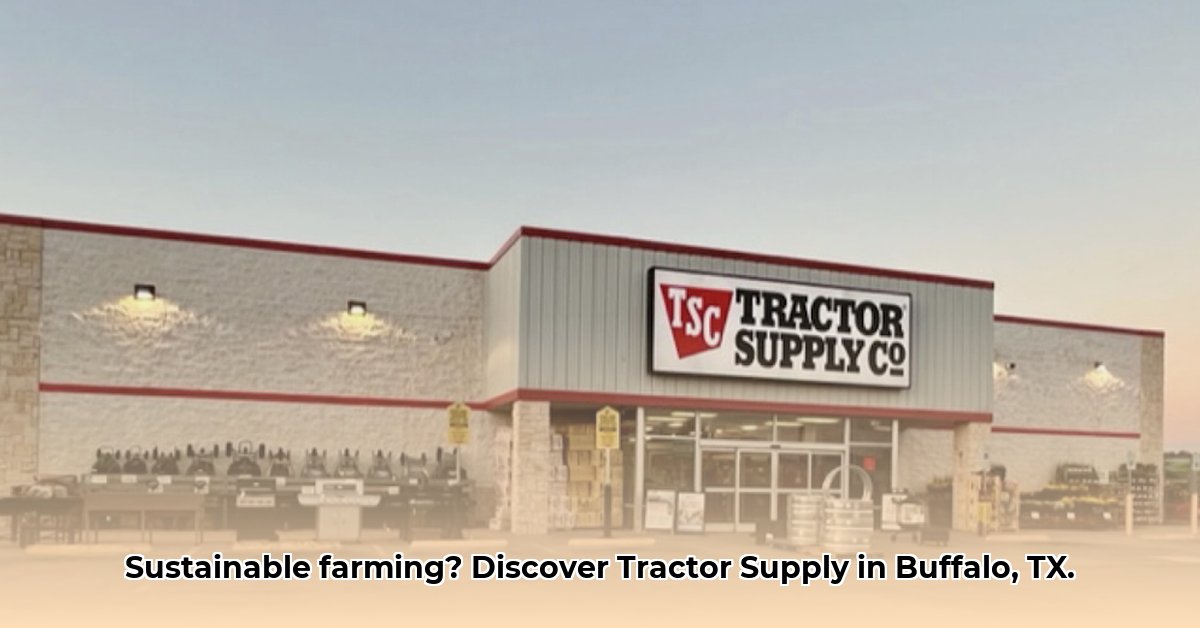
Tractor Supply's presence in Buffalo, Texas, extends beyond a retail outlet; it represents a potential cornerstone for sustainable agricultural practices within the community. This article analyzes the store's current contribution, identifies key opportunities for improvement, and proposes actionable steps for stakeholders to foster a more environmentally responsible and economically vibrant agricultural sector. For more information on this specific location, visit the Buffalo Tractor Supply website.
Product Diversity: Supporting Sustainable Farming Practices
Tractor Supply in Buffalo offers a wide array of products relevant to sustainable agriculture. From organic seeds and livestock feed to various tools and fencing materials, the store provides a convenient one-stop shop for local farmers and gardeners. This broad selection directly supports diverse sustainable farming practices. However, a more detailed inventory showcasing specifically labeled sustainable products would be beneficial for consumers seeking environmentally friendly options. Do these readily available options truly reflect the growing consumer demand for sustainable agriculture products?
Community Accessibility: A Critical Factor for Success
The store's convenient location near major highways significantly enhances its accessibility for the local farming community, minimizing travel time and optimizing resource allocation. This accessibility factor is crucial for empowering local farmers and gardeners to adopt sustainable practices, which often necessitate more frequent trips for specialized products. Is this accessibility leading to increased adoption of sustainable farming methods in the region?
Sustainability Gaps: The Need for Transparency
A significant limitation to assessing Tractor Supply's full environmental impact is the lack of publicly available data on their sustainability initiatives. Absence of information on waste reduction, energy efficiency, and sustainable sourcing practices hinders a thorough evaluation of their actual contribution to a greener Buffalo. How can Tractor Supply improve transparency to better demonstrate their commitment to sustainable agriculture in the community?
Synergistic Potential: Collaboration for a Greener Future
Significant opportunities exist for Tractor Supply to become a catalyst for sustainable agriculture in the area. Local sourcing of products, partnerships with regional farms, and the promotion of organic seeds and sustainable farming techniques could foster a robust and resilient local food system. What strategies could further enhance the synergistic potential between Tractor Supply and local producers to boost ecological sustainability?
Actionable Insights: A Multi-Stakeholder Approach
The following table outlines actionable steps for Tractor Supply, local farmers/gardeners, and the local government to promote sustainable agriculture practices.
| Stakeholder | Short-Term Actions (0-1 year) | Long-Term Actions (3-5 years) |
|---|---|---|
| Tractor Supply Co. | Conduct an environmental audit; initiate partnerships with local sustainable farms; publicly report key sustainability metrics. | Develop and publicly release a comprehensive sustainability plan with measurable targets for waste reduction and eco-friendly sourcing; actively promote sustainability initiatives within the business. |
| Local Farmers/Gardeners | Attend workshops on sustainable farming; explore CSA (Community Supported Agriculture) models. | Actively participate in collaborative projects with Tractor Supply; adopt sustainable farming practices and track their impact. |
| Local Government | Offer financial incentives for sustainable agriculture; host educational events. | Develop and implement a cohesive regional strategy for sustainable agriculture; encourage collaboration between stakeholders. |
Risk Assessment: Mitigating Potential Challenges
Implementing sustainable practices presents various challenges. The table below outlines key risks and proposed mitigation strategies:
| Risk Factor | Likelihood | Impact | Mitigation Strategy |
|---|---|---|---|
| Lower consumer demand for sustainable goods | Moderate | Moderate | Conduct market research; tailor product offerings; educate consumers about the benefits of sustainability. |
| Increased costs of sustainable practices | High | High | Explore government subsidies and incentives; adopt cost-effective sustainable practices. |
| Supply chain disruptions | Moderate | High | Diversify supply chains; build strong relationships with multiple suppliers. |
| Negative publicity | Low | High | Proactively communicate sustainability efforts; foster transparency and community engagement. |
Regulatory Implications: Navigating the Legal Landscape
Compliance with local, state, and federal regulations regarding pesticide use, animal welfare, and water resource management is vital for Tractor Supply's continued success and responsible environmental stewardship. Regular updates on these regulations are crucial to maintaining legal compliance and developing a strong sustainability model.
Conclusion: A Collaborative Path Forward
Tractor Supply's potential to significantly contribute to sustainable agriculture in Buffalo is considerable. However, realizing this potential requires ongoing research, transparent communication, and the continued collaboration of various stakeholders to overcome identified challenges. Increased public data transparency and a proactive approach to environmental stewardship will be crucial in realizing a truly sustainable future for Buffalo's agricultural sector.